How to See Manatees at Blue Spring State Park in Florida!
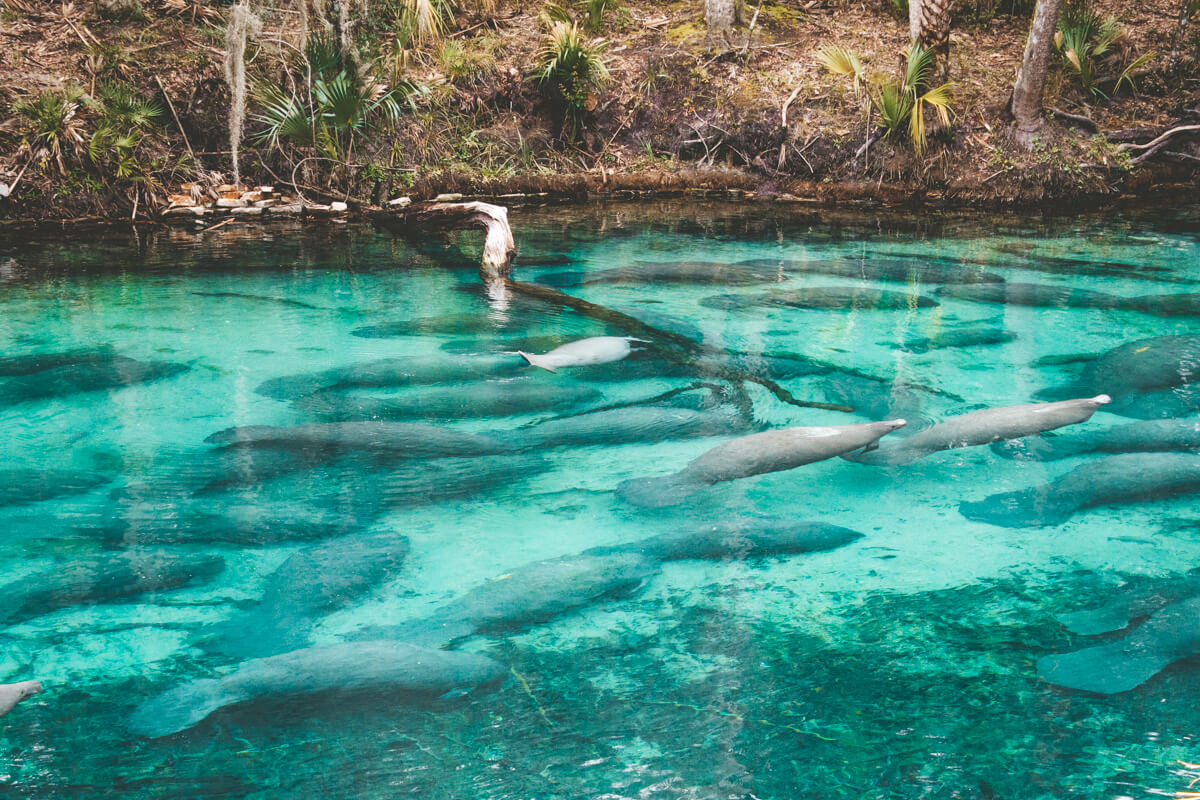
Are you planning a trip to Orlando, Florida during the winter time and wondering where you can go to see manatees?
The answer is Blue Spring State Park!
Growing up in South Florida, I was definitely spoiled with regular manatee viewings in canals and waterways! But when I moved to Orlando and found out I could see dozens (sometimes hundreds) of manatees gathered in one place, I was shocked!!
Blue Spring State Park is about an hour from downtown Orlando, but it feels worlds away from the theme parks and city chaos. And in the winter months, manatees migrate to the crystal clear spring water to stay warm. On a cold day, I can almost guarantee you will see manatees here!
In this guide, I’ll explain everything you need to know about how to see manatees at Blue Spring State Park, including the best time of year to visit, what to expect inside the park, and the different ways you can get up close and personal with the manatees!
So, if you’re planning a winter trip to Central Florida and want to add something outdoorsy and unforgettable to your itinerary, keep reading!
Where is Blue Spring State Park?
Blue Spring State Park is located in Orange City, Florida, about 35 miles north of Orlando.
If you’re staying near the theme parks, expect the drive to take around an hour, depending on traffic. To me, that’s an easy half-day trip, especially if you’re craving something outdoorsy after a few packed theme park days!
The park sits along the St. Johns River and is built around a natural spring that stays 72°F year-round. That steady temperature is exactly why manatees gather here in the winter (more on that in the next section).
As of 2026, the entrance fees for Blue Spring State Park are:
- $6 USD per vehicle (2–8 people)
- $4 USD single-occupant vehicle
- $2 USD pedestrians or bicyclists
Or, if you have a Florida State Parks Pass, entrance is free! This is one of the most affordable things you can do near Orlando!
⚠️ Important Note: The park often reaches capacity during manatee season, especially on cold winter weekends. I personally recommend arriving right when the park opens (8AM) to avoid long lines or being turned away.

When can you see manatees at Blue Spring State Park?
The best time of year to see manatees at Blue Spring State Park is during the winter months, typically from mid-November through mid-March.
I’ve personally visited in January and February and had very different experiences in terms of the number of manatees (and where they were!).
What actually dictates whether or not you will see manatees at Blue Spring is not just the time of year but the weather!
In short, you are most likely to see manatees at Blue Spring when the air temperature is cold (or has been cold for a while).
Why? Because the air temperatures dictate the water temperatures, which is what the manatees care about!
P.S. The official Blue Spring State Park Instagram account often posts daily manatee counts in the winter. This is a great way to find out if there are a lot of manatees before your visit! 📱
Manatees and Cold Water
Unlike other marine mammals like sea lions and walruses, manatees do not have a thick layer of blubber. They also have slow metabolisms and are therefore not good at maintaining their body temperatures.
For this reason, manatees require water temperatures of over 68°F (20°C) to survive. If they are exposed to water temperatures under this for prolonged periods of time, they can experience cold stress syndrome, which can be fatal.
So, during the winter months when their habitats (like Florida rivers) drop below 68°F, manatees migrate to the Florida springs.
Why? Because all Florida springs are naturally heated to ~72°F year round, thanks to the water coming from deep underground aquifers that are unaffected by the air temperatures!
While this might feel chilly to us humans, it’s nice and warm to the manatees escaping the cold river waters!
So, on cold mornings (especially after a prolonged cold snap), you can see hundreds of manatees packed into the clear water near the spring head staying warm!!
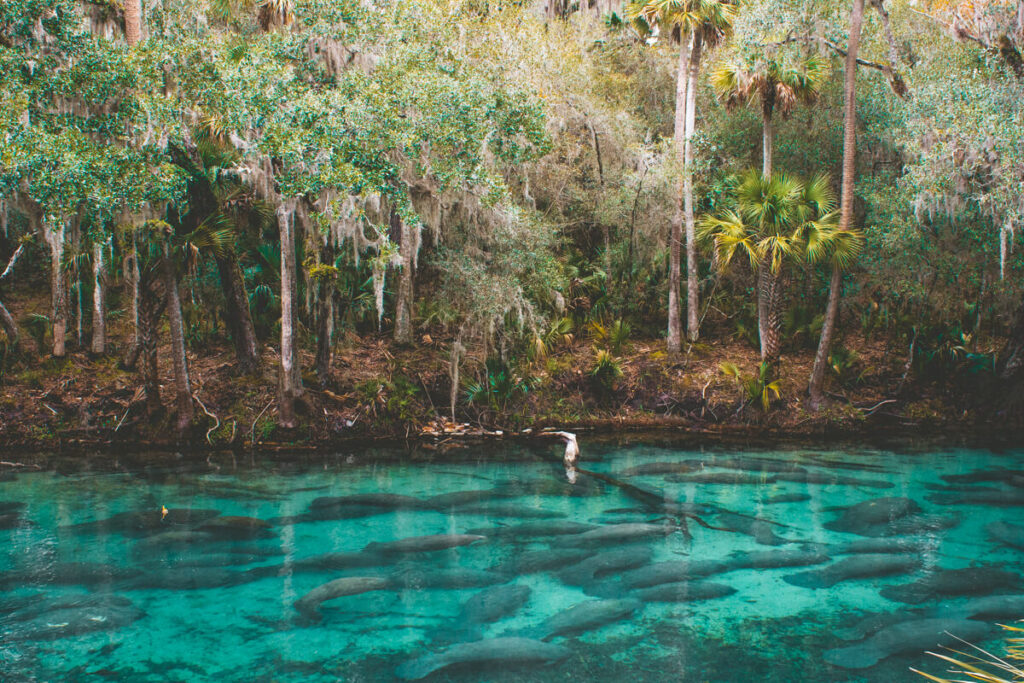
The Best Time of Day to Visit
If you want the most peaceful experience at Blue Spring State Park, go early!!
The park opens at 8 AM daily, and I always recommend arriving right at opening during manatee season, especially if you are visiting on a weekend.
Not only is it quieter, but colder mornings often mean more manatees staying inside the spring!
By late morning or afternoon, especially on warmer days, some manatees may head back into the river to feed.
If you’re visiting Orlando in the winter and really want to see manatees, try to plan your Blue Spring visit on one of the colder days of your trip. That’s when you’ll usually see the highest numbers!
How to See Manatees at Blue Spring State Park
From the Walking Path
The easiest way to see manatees at Blue Spring State Park is from the paved walking path and wooden boardwalk that run along the spring (shown below as the blue line).
Once you arrive at the park, there are two parking lots that the staff alternates between depending on capacity. The main lot is down at the south end of the park near the river, and the other is in the middle of the park near where the main nature trail starts.
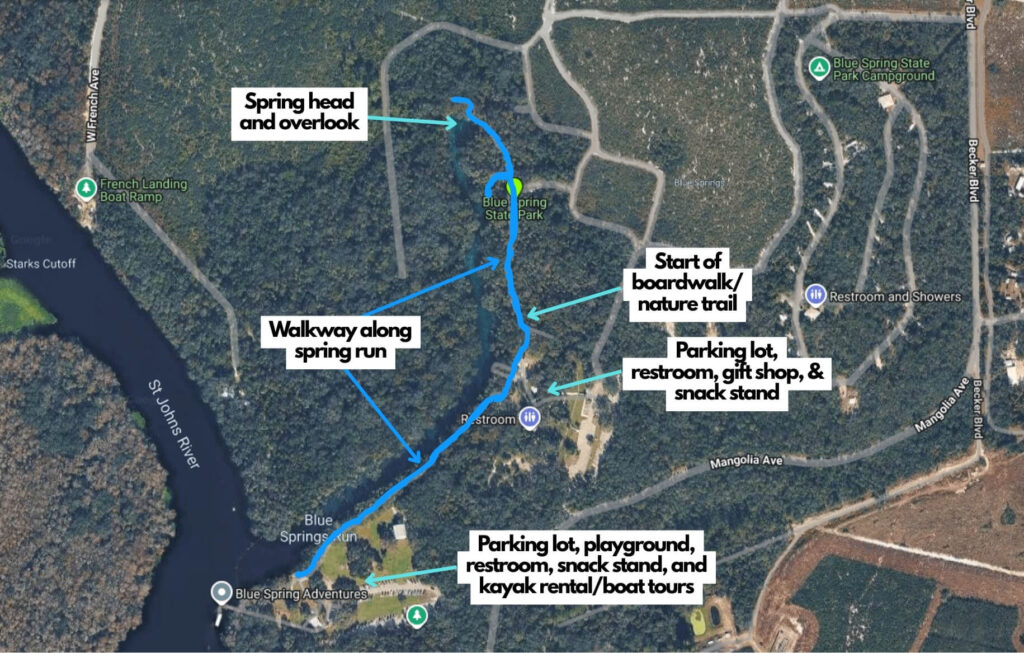
After you park your car, make your way west towards the spring run and follow the pathway north along the spring run (shown in blue). If you parked near the boardwalk (middle lot), you can walk the northern half of the park first and then double back to the south side (or vice versa!).
The designated walking path and boardwalk follow the 0.5 mile long spring run all the way to the spring head at the top of the park.
Along the way, there are multiple viewing platforms that extend over the water. These give you a clear view straight down into the spring, where you’ll see manatees clustered together during cold weather.
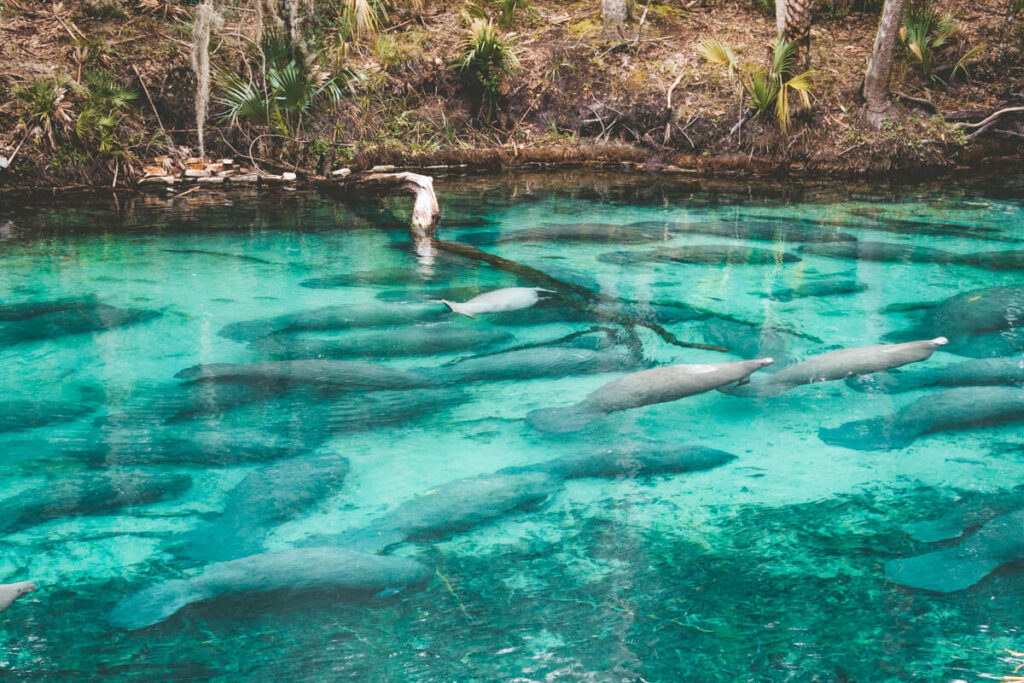
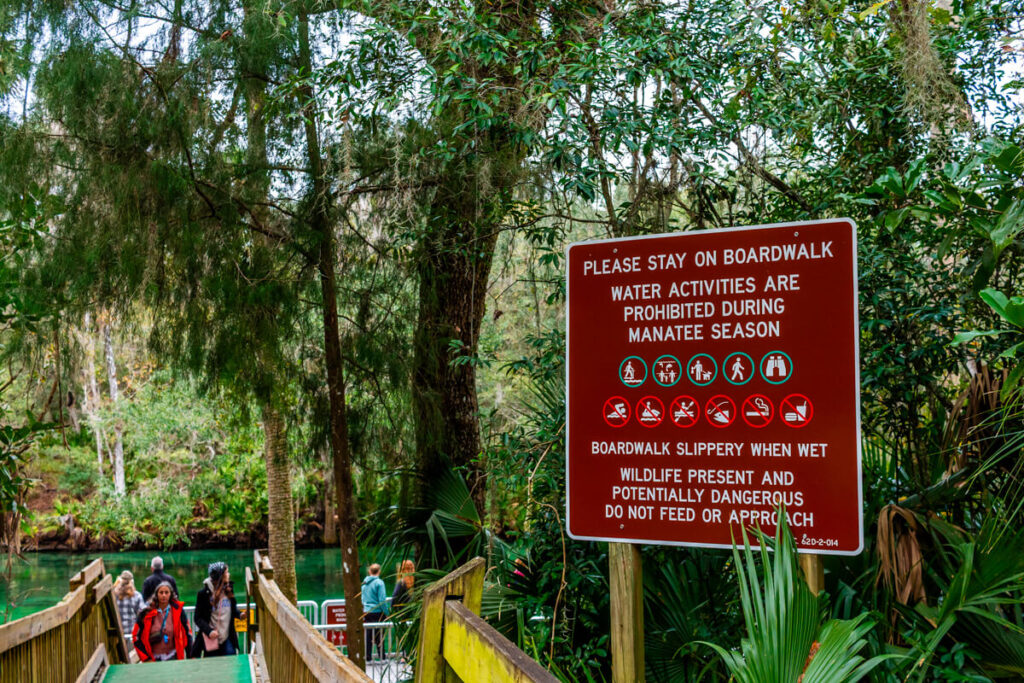
The water in the spring is a beautiful turquoise color and crystal clear, especially compared to the darker, tannin-stained water of the St. Johns River.
At the northern end of the boardwalk, you’ll reach the spring head overlook. This is where the water bubbles up from underground, and during peak winter days, this area can be packed with manatees staying warm.
This spot is also slightly elevated than the rest of the boardwalk and provides an awesome view down into the spring!
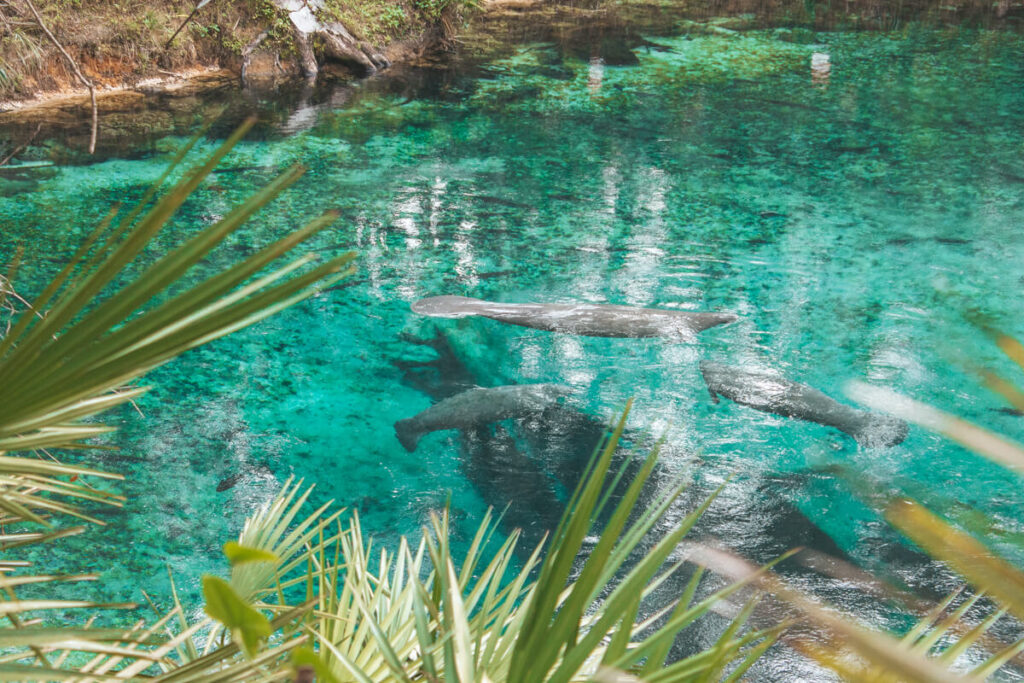
One thing I love about Blue Spring is how accessible it is! Everything is either paved walkways or wooden boardwalks.
Plus, the boardwalk has ramps to the viewing platforms, which makes it easy for families with strollers, grandparents, or anyone who doesn’t want a strenuous hike.
You don’t have to be “outdoorsy” to enjoy the manatees here! It’s more of a peaceful stroll than a hike.
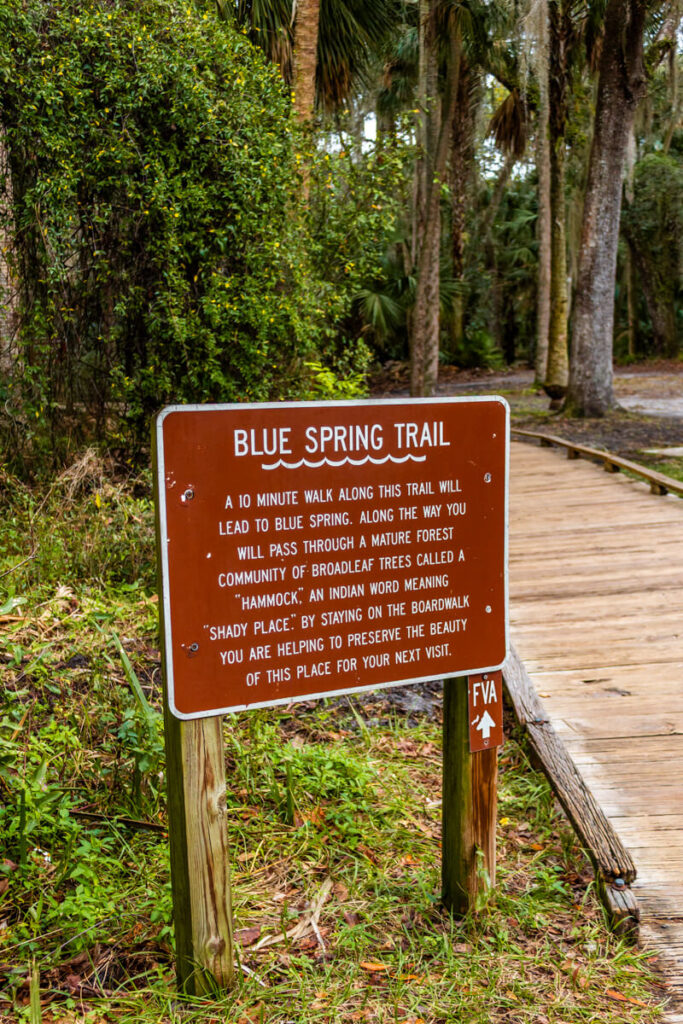
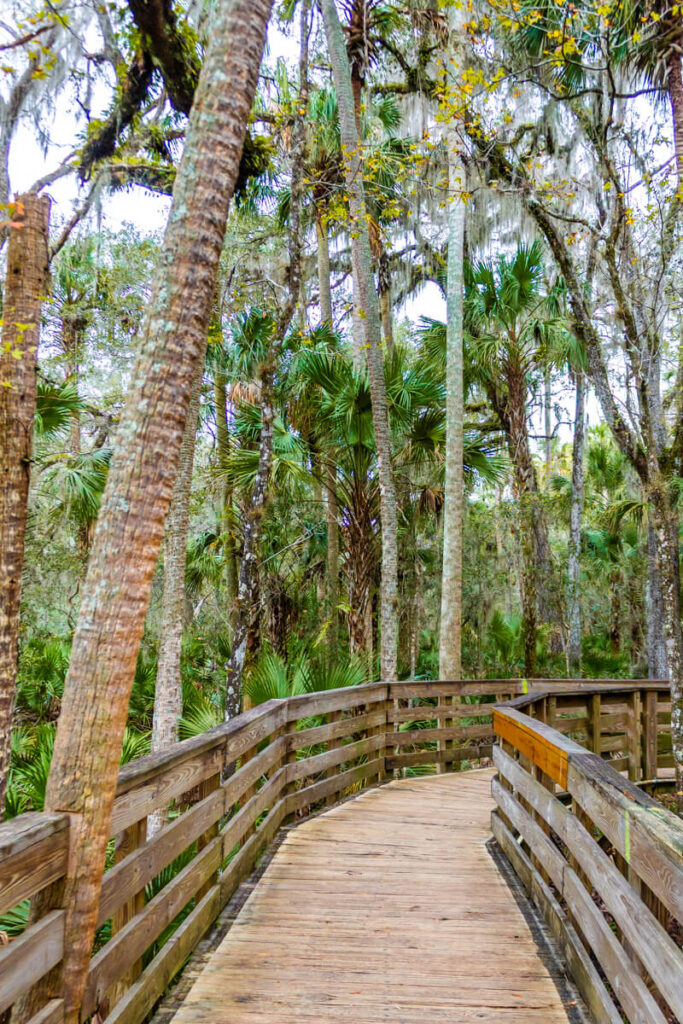
Kayaking with Manatees at Blue Spring State Park
If you want to get a little closer to the manatees (without breaking any rules), kayaking at Blue Spring is an amazing option, even in winter!
During manatee season (typically mid-November through mid-March), you are not allowed to swim or kayak inside the spring run itself. The spring is closed to all water activities to protect the manatees while they’re staying warm!
However, you can launch a kayak from Blue Spring State Park into the St. Johns River.
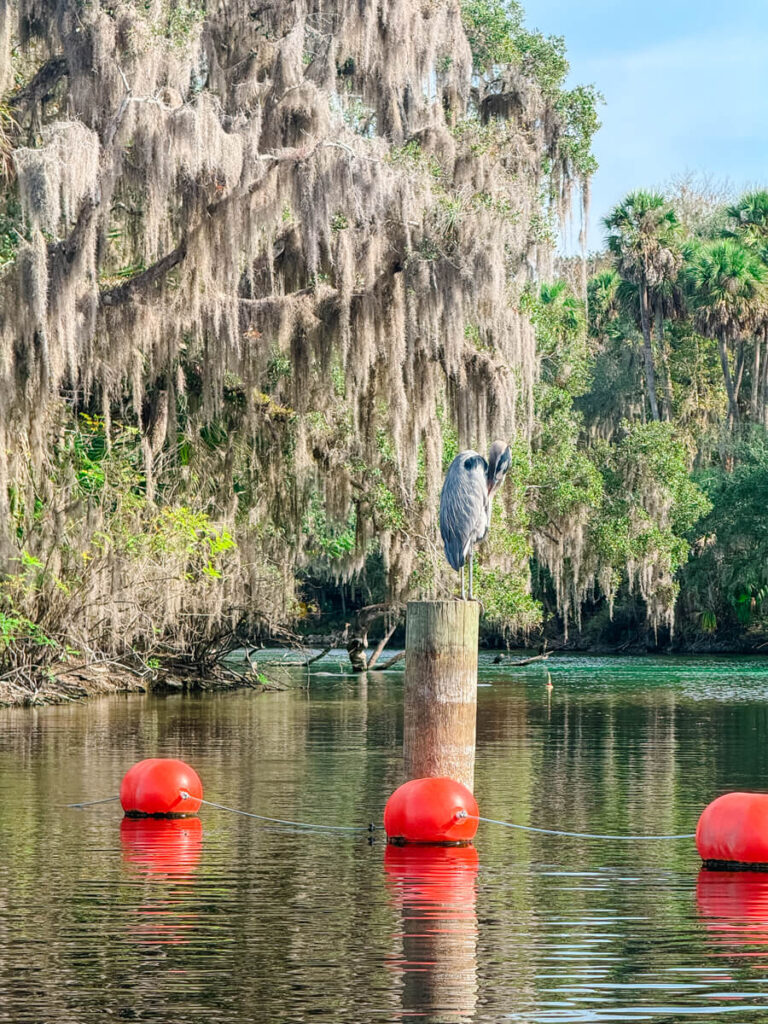
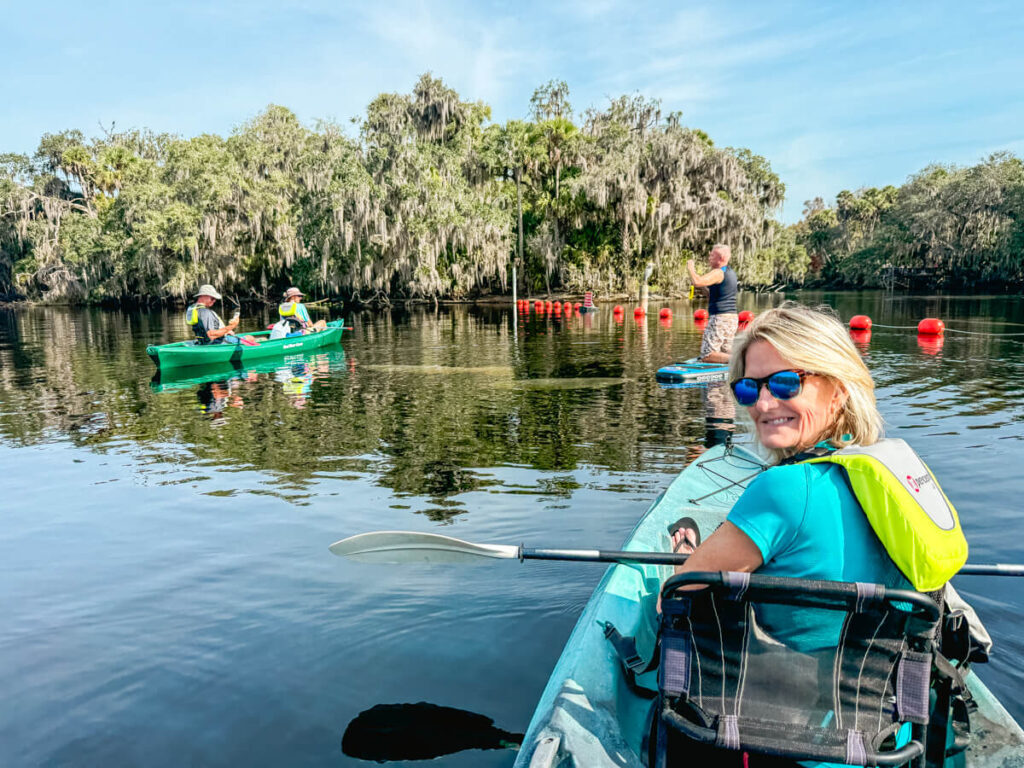
From there, you can paddle up or downstream, but if your goal is to see manatees, you’ll want to stay close to the buoy line that marks the entrance to the spring run, as shown in the image below.
⚠️ Important Note: It is illegal to touch, feed, or harass Florida manatees. Please observe from a distance! It is okay if the manatees come to you, but do not touch them.

During the winter months, you are not allowed to cross this buoy line on your kayak. However, the manatees don’t have to follow this rule😉
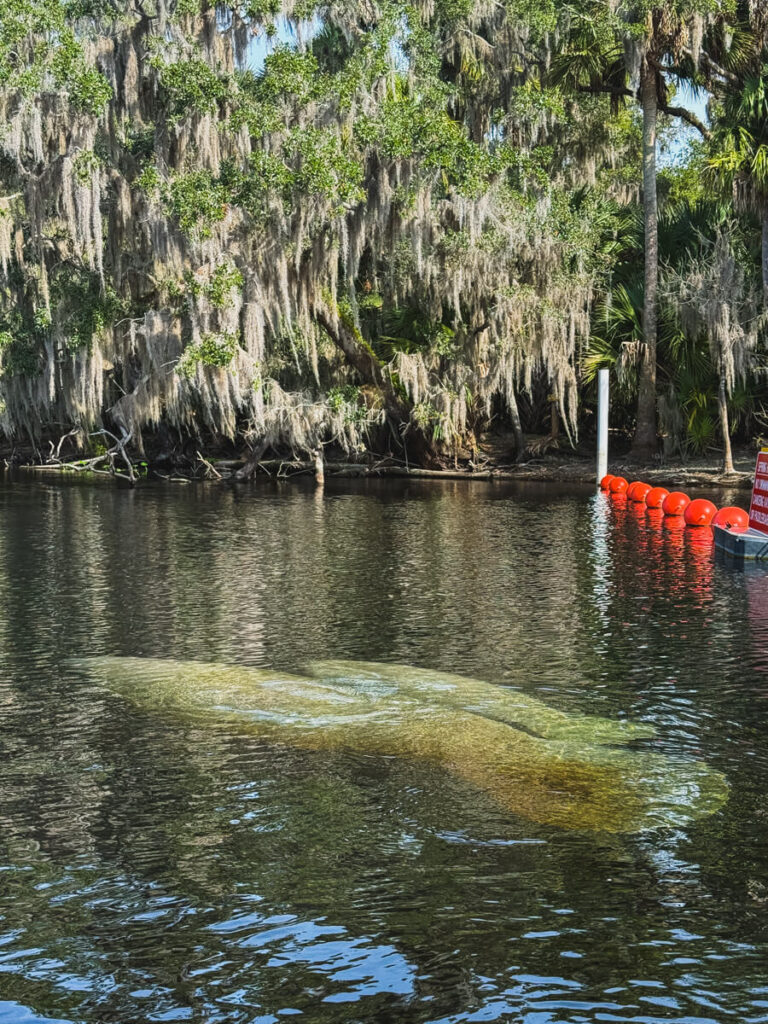
The manatees will swim in and out of the spring run here, and you can simply sit on your kayak and watch the show. From here, you also have a perfect view into the spring run itself, where the water is extremely clear and many manatees will be hanging out!
And of course, you can also venture up and down along the St. John’s River, where you’re likely to see alligators, birds, turtles, and maybe even more manatees!
Check out my full guide on kayaking at Blue Spring State Park here! (Coming Soon)


When is the best time for kayaking with manatees at Blue Spring?
In my opinion, the best time to kayak at Blue Spring to see the manatees is in the winter, but once it has started to warm up a bit.
Last time I visited Blue Spring in late January, it was after a few cold snaps, but not actually during one. (The high that day was around 75°F).
As a result, there were barely any manatees in the spring run itself (only a handful, compared to hundreds the last time I had visited when it was in the 50s).
We quickly learned that once the air (and therefore the water) starts to warm up, the manatees start venturing back out into the river for food (because there isn’t much food in the spring run itself).
So, we decided to rent kayaks and head out into the river! Immediately, we saw several manatees, most of them right in front of the spring run where the water was clearest.
Note: Manatees are very curious, so it’s totally normal for them to approach you and even bump your kayak! Just remember, do not touch them!

Guided Kayak Tours
If you’re visiting Blue Spring State Park for the first time and/or don’t feel comfortable kayaking on your own, I highly recommend booking a guided kayak tour!
This highly rated guided kayak tour is only $80 per person. It launches just outside Blue Spring State Park, and then takes you down the St. John’s River and to the spring run (the same area you’d visit if you launched from the park itself).
While you can absolutely explore the area on your own, a guide will allow you to feel more comfortable navigating, and you’ll learn a lot more about the area and the manatees.
Plus, these guides are experts at spotting unique wildlife that you might miss if you went alone!
Boat Tour at Blue Spring State Park
If kayaking isn’t your thing, another great way to see manatees at Blue Spring State Park is by taking the St. Johns River Cruise.
This guided boat tour departs from inside the park every day at 10am and 1pm and costs $35 for adults and $20 for children.
You can book your tickets in advance on the Blue Springs Adventures website to make sure it doesn’t sell out on the day you visit.
It’s a relaxed, shaded ride, and the captain shares information about the local wildlife, ecosystem, and history of the area as you cruise along the St. John’s River!
I especially recommend this option if:
- You’re visiting with grandparents
- You have younger kids
- You don’t feel comfortable paddling
- You just want to sit back and enjoy the scenery
During the winter months, you may see manatees swimming in the river near the spring entrance (or anywhere in the river!). Your guide will also be able to point out other wildlife along the way. Depending on the day, you might spot alligators, turtles, wading birds, bald eagles, or even otters.
In the winter, when swimming in the spring is closed, this is one of the best ways to still get out on the water and experience the river without having to kayak.
Is Blue Spring State Park Worth Visiting in Winter?
If you’re visiting Orlando during the winter, Blue Spring State Park is absolutely worth adding to your itinerary, especially if you want to see manatees!
Seeing manatees in the wild is one of the most special experiences you can have in Florida. And the fact that you can see dozens — sometimes hundreds — gathered in one place makes it even more incredible.
To me, Blue Spring State Park is the perfect half-day escape from the crowds of Orlando and the theme parks!
Of course, if you do plan to visit the theme parks, make sure to check out my Ultimate Guide to Harry Potter World and my 2 Day Harry Potter World Itinerary to help you plan!